Black Key Everyday carry, made plain Ask what is in stock

Key organizers · Card wallets · Pocket notebooks

Keys that do not jangle. Cards that lie flat. Paper that takes a pen.

Three objects, made in runs in a Portland workshop. Every one is listed with its measurements, its material and its weight, and whether it is on the shelf right now is answered by email, not by a badge.

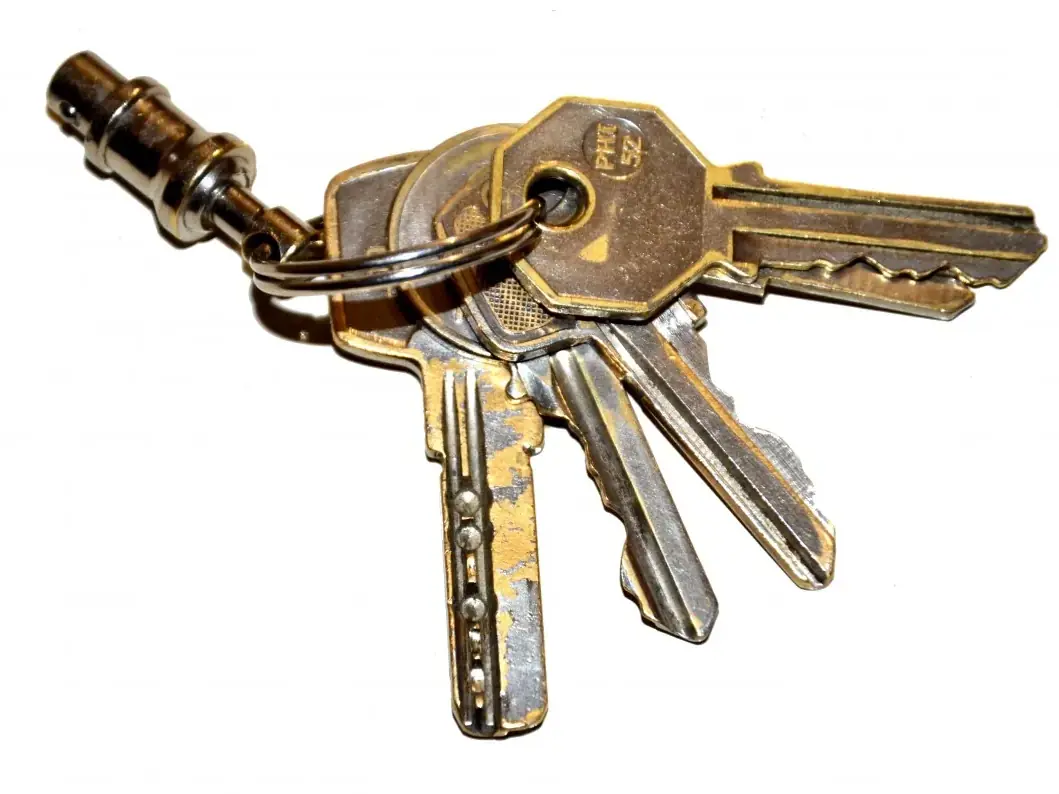
A set of brass and steel keys on a single split ring, photographed on a white ground
No. 01 — the set most people carry before they stack it

No. 01

Key organizer

A machined body in aluminum or brass that holds your keys in a stack on two threaded posts. Keys fold in like the blades of a pocket knife and swing out one at a time. Nothing rattles because nothing is loose.

Body
Machined aluminum, anodized black, or solid brass left bare
Capacity
Four-key body: two to four keys. Eight-key body: four to eight.
Closed length
72 mm, both bodies
Thickness
12 mm with four keys in · 18 mm with eight
Weight
Aluminum 22 g or 26 g · brass 46 g or 58 g
Hardware
Stainless posts, coin-slot screws, spacers in two thicknesses

Made in runs. A body is either on the shelf or it is not; ask and we say which.

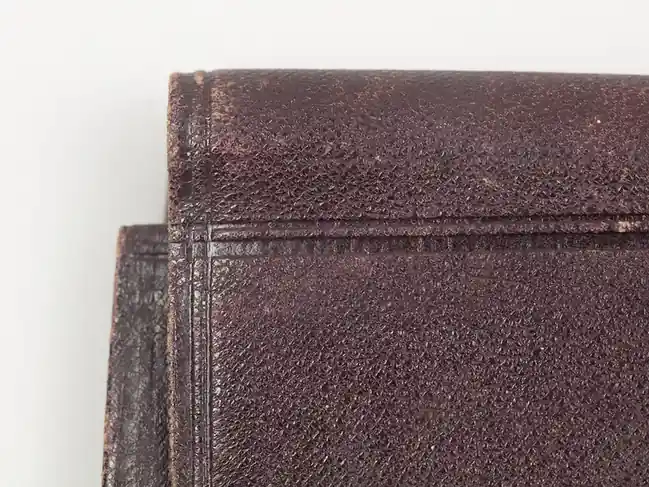
The stitched edge and flap of a dark brown leather wallet, close up
No. 02 — the stitched edge is where a wallet shows its making

No. 02

Card wallet

Vegetable-tanned full-grain leather, cut, saddle-stitched and edge-finished on the bench. It carries cards and nothing else: no coin pocket, no bill fold, no window. The slots start tight and settle to the cards you actually carry.

Leather
Vegetable-tanned full-grain, natural tan or dark brown
Capacity
Three-card slip: three when new, four after a month. Six-card fold: four new, six after a month.
Size
Slip 88 × 60 mm · fold 92 × 66 mm closed
Weight
Slip 18 g · fold 34 g, empty
Thread
Waxed polyester, saddle-stitched by hand
Not included
Coin pocket, bill fold, card window, snap

Made in runs. Tan and dark brown come from separate hides, so one color can be out while the other is in.

A notebook lying open on a dark table with a row of pens beside it
No. 03 — opens flat from the third page onward

No. 03

Pocket notebook

A hard cover over sewn sections, so the book opens flat and the pages stay put. The paper is chosen for pens, not for weight: a fountain pen writes on it without feathering and a ballpoint does not dent through.

Cover
2 mm binder's board wrapped in black book cloth
Paper
90 gsm, off-white, ruled at 6 mm or dot grid at 5 mm
Pages
96, in three sewn sections of 32
Size
90 × 140 mm · 68 g
Binding
Thread-sewn sections, lay-flat spine
Refills
Fit the strapped cover only, not the bound book

Made in runs. Ruled and dot grid are separate runs; ask for the one you write on.

StockMade in runs, not to order
ListingsMeasurements and weights on every object
MaterialsAluminum, brass, leather, paper
LimitsNo key cutting, no security claims

The shelf

What we make, and the small parts that go with it

Six things. Each is listed by size and weight, and each is either in stock or waiting on the next run.

Key organizers

Two body lengths of stack, in black anodized aluminum or bare brass. Both take standard house and office keys on stainless posts. The eight-key body ships with a spacer set so a short stack still sits snug.

Card wallets

A three-card slip and a six-card fold, cut from vegetable-tanned full-grain leather. Slim profile, no coin pocket. The tan darkens with handling; the dark brown mostly stays put.

Pocket notebooks

Hard cover, sewn sections, 90 gsm paper in ruled or dot grid. The bound book is one piece; the strapped cover takes two refills on elastic bands and outlives many of them.

Screws and posts

Spare coin-slot screws and threaded posts for both organizer bodies, sold in pairs. Longer posts come as an expansion pack when a stack grows past what the standard posts close over.

Spacers and loop pieces

Spacer washers in two thicknesses take up the slack when you carry fewer keys than the body holds. The loop piece is a small D-ring on a post for a fob or a car key that will not go inside.

Refills and bands

Sewn 48-page refills in the same 90 gsm paper, ruled or dot grid, for the strapped cover. Replacement elastic bands in black, cut to the cover's length.

Bench notes

How a piece gets from the shelf to your pocket

Black Key makes a short list of everyday-carry objects in a workshop in Portland, Oregon: key organizers, card wallets and pocket notebooks, plus the screws, posts, spacers, bands and refills that keep them in use. We do not make a long list because a long list is where measurements stop being checked.

Everything is made in runs. A run of organizer bodies is machined, deburred, anodized or left bare, and assembled with posts and spacers as a batch. Leather is cut from a hide in the sizes a run needs, stitched, and edge-finished before the next hide is opened. Notebooks are folded, sewn in sections and cased into their covers in the same way. When a run sells through, that object is sold out until the next run is finished, and we say so plainly rather than take money for a shelf that is empty.

A job starts when you write to us. Say which object you want, which material or ruling, and where it is going. We reply by email with what is on the shelf right now, the measurements and weight of that exact piece, and what the next run is if the one you asked for is gone. If you want to go ahead, the reply tells you how; nothing is charged until you have said yes to a piece that exists. The piece is packed in plain card with its specification sheet and shipped to a United States address. If a screw loosens or a slot stretches more than it should, you write again and we sort it with a part or a repair.

We value plain description over adjectives. A listing tells you what a thing is made of, how big it is, how much it weighs and what it will not do. We photograph objects on a plain ground so you see the thing, not a scene. And we turn down work that would make the list less honest.

  • No key cutting, no key copying and no lock work of any kind. We make the body the keys sit in, nothing else.
  • No security or anti-theft claims. An organizer keeps keys tidy; it does not keep them safe.
  • No engraving and no personalization. Every piece in a run is the same piece.
  • No subscriptions and no monthly boxes. You ask for an object when you want one.
  • No leather care service. We tell you how to look after a wallet and sell nothing for it.
Answer sheet

The questions that arrive most weeks

Is a piece in stock right now?

Ask by email and we answer with what is on the shelf at that moment. The site does not show a live count because a count that is wrong is worse than none. If the piece you want is between runs, the reply says when the next run is due and you can ask again then.

Will it hold a car fob?

Inside the stack, no: nothing thicker than 12 mm goes on the posts, and most fobs are thicker than that. A fob hangs from the loop piece on the outside of the body, where it can still be reached without opening the stack.

Do you cut or copy keys?

No. We make the body that holds keys and nothing to do with the keys themselves. For cutting or copying, use a shop that does that work; any standard flat key with a hole of 5 mm or more fits the posts once you have it.

How many cards really fit?

The three-card slip takes three on the day it arrives and four after a month of use. The six-card fold takes four comfortably when new and six once the leather has relaxed. Past those counts the slots stretch and stay stretched, so we do not suggest it.

Do you ship outside the United States?

Not at present. Pieces ship to addresses in the United States only. If that changes, this answer will change with it; until then a request from elsewhere gets a polite no rather than a quote.

Can I get a refill?

For the strapped cover, yes: 48-page sewn refills in ruled or dot grid, on the same paper. The bound hard-cover notebook has no refill because its sections are sewn into the cover; when it is full, it is full, and you start the next one.

What happens if a screw comes loose?

Tighten it with a coin. If it keeps working loose, a spare pair of screws and posts is on the shelf and we send them on request. A thread that has been over-tightened and stripped is replaced the same way; the body itself does not wear out from it.

Ask

Tell us the object and the material, and we tell you if it is on the shelf.

One email each way is usually enough. You get the measurements and weight of the exact piece, and a plain yes or no on stock.

Ask what is in stock
Mailbox

[email protected]
Every question, order request and part request goes to this one address.

Hours

The mailbox is read Monday to Friday, nine in the morning to five in the afternoon, Pacific time. Replies go out in the order they arrive.

Where

Workshop in Portland, Oregon. We ship to addresses across the United States. No showroom, no pick-up; the form is the front door.